Teaching & Talks

Teaching, Mentorship & Research Talks

Sharing the work beyond the lab

8

Talks & Presentations

Conferences, symposia, seminars & lectures

6+

Years Teaching & Mentoring

Undergraduate instruction & graduate mentorship

2

Universities

McMaster University, Canada · GUC, Egypt

Online Course

Production-grade ML pipelines, taught end to end

The same research-informed, hands-on approach I bring to the classroom, now open to anyone, anywhere.

Production-Grade Deep Learning Pipelines: TFX & Vertex AI course thumbnail

Udemy · Self-paced

Production-Grade Deep Learning Pipelines: TFX & Vertex AI

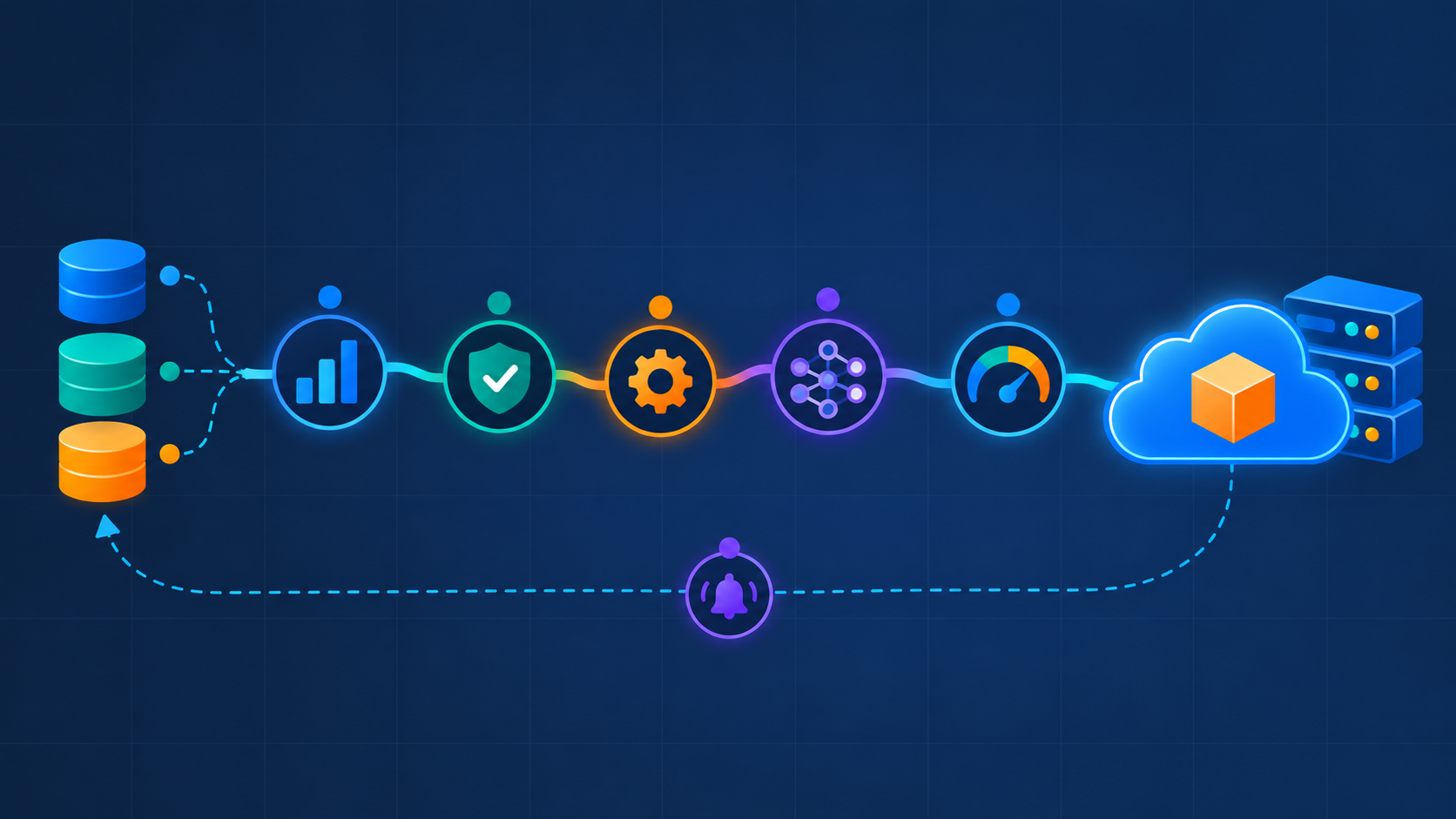
Take a deep learning model from notebook to production on Google Cloud. You build a full TFX pipeline on a real problem (predicting concrete compressive strength), run it on Vertex AI, deploy behind a quality gate, and close the loop with automated retraining.

8 hours of video 14 resources 2 articles Companion code on GitHub

Stage 01

Build

TFX components for data validation, transformation, and model training, with experiments tracked in MLflow.

Stage 02

Orchestrate

Run the pipeline locally on Apache Beam, then containerize it with Docker and scale it on Vertex AI Pipelines.

Stage 03

Deploy

Model registry, a quality gate before release, and a live serving endpoint.

Stage 04

Automate

CI/CD with GitHub Actions, plus an automated retraining loop.

Teaching Philosophy

How I teach, and why it matters

Research-Informed Teaching

My teaching is directly shaped by active research in ML-powered infrastructure systems. Students engage with live methods — risk modeling, intelligent asset management, geospatial analytics — through real datasets and case studies drawn from ongoing work. This connection between lab and classroom means students are not learning yesterday’s tools; they are engaging with approaches at the frontier of their field. Graduate mentorship extends this further: students participate in research planning, manuscript development, and scholarly dissemination as co-contributors, not passive observers.

AI-Integrated Engineering Education

Engineering education must evolve at the pace of the tools reshaping the field. Across courses in infrastructure risk management and machine learning applications, I embed data analytics, predictive modeling, and intelligent systems into the curriculum alongside traditional engineering methods. Students gain hands-on experience with the computational approaches — simulation, ML pipelines, optimization — that define modern infrastructure practice. The goal is to produce engineers who are as fluent in algorithmic thinking as they are in structural analysis.

Experiential & Inquiry-Driven Learning

Technical proficiency without problem-solving instinct produces capable but reactive engineers. My courses are built around authentic challenges: team-based projects, real infrastructure datasets, and capstone experiences developed in partnership with municipal agencies and industry collaborators. I use flipped classroom formats and structured discussion to shift students from passive recipients to active investigators — asking not just how to solve a problem, but why it matters, who it affects, and what the limits of the solution are. This mindset — critical, curious, and adaptive — is what separates engineers who can execute from those who can lead.

Ethics & Societal Responsibility

As ML methods become embedded in high-stakes infrastructure decisions, the ethical dimensions of those systems become engineering problems, not afterthoughts. I treat algorithmic bias, model transparency, and sustainability as core curriculum — not optional modules. Students are asked to interrogate their models: who benefits from this prediction, who is harmed by an error, and what is obscured by the data. The engineers I aim to develop are technically rigorous and ethically grounded — capable of deploying intelligent systems responsibly and of communicating their limitations honestly to non-technical stakeholders.

Equity & Inclusion

My own path has made equity a deeply personal commitment, not an institutional requirement. I apply accessible content design, differentiated instruction, and culturally responsive mentorship across every course I teach. Graduate advising is individualized: I meet students where they are analytically, help them develop their own research voice, and create genuine pathways to publication and conference participation regardless of prior background. A classroom where every student can contribute is not just more inclusive — it is intellectually richer for everyone in it.
Student Advising & Mentorship

Guiding students from inquiry to contribution

Across McMaster University and GUC, I have advised both undergraduate and graduate students — providing academic guidance, research mentorship, and career development support at every stage, from first-year coursework through to thesis completion and peer-reviewed publication.

Undergraduate

Academic Guidance

Supporting undergraduate students in coursework, analytical methods, and problem-solving approaches — building the quantitative and computational foundations needed for advanced study and engineering practice.

Graduate

Research Planning & Execution

Supervising graduate researchers through the full research lifecycle — problem framing, methodology selection, analytical execution, and interpretation of results — with a focus on rigorous, reproducible practice.

Graduate

Scholarly Communication

Guiding the preparation of peer-reviewed manuscripts and conference papers — from first draft to submission — helping graduate students develop their research voice and meet the standards of high-impact journals.

Undergraduate & Graduate

Career & Academic Pathways

Advising students at all levels on graduate program pathways, research positioning, and professional development — connecting academic work to long-term career trajectories in research, industry, and engineering practice.

Mentorship Outcomes

Undergraduate students mentored into graduate programs; graduate researchers supervised to thesis completion and co-authored journal publications — with junior researchers developed into independent contributors across ML and infrastructure engineering.

Talks & Presentations

Research dissemination across conferences, symposia, seminars, and lectures

Lectures & Workshops

Crash Course on Machine and Deep Learning

Faculty of Engineering, McMaster University · Hamilton, ON

Lecture Nov 2025

Conference Presentations

Investigation of Heavy Cargo Drones for Last-Mile Delivery

Canadian Transportation Research Forum (CTRF) Annual Conference · Kelowna, BC

Conference May 2024

Invited Talks & Symposia

Drones for Heavy Cargo Transportation in Modern UFT Networks

Smart Freight Centre Symposium, University of Toronto · Toronto, ON

Symposium Jun 2024

Drones for Last-Mile Delivery Projects: Current and Future Pathways

Smart Freight Centre, McMaster University · Hamilton, ON

Invited Talk Jun 2023

Departmental Seminars — McMaster University

Resilience-Driven Project and Asset Management

Engineering Seminar Series, McMaster University · Hamilton, ON

Seminar Apr 2024

Optimizing Canada’s Infrastructure Asset Management Decisions

Engineering Seminar Series, McMaster University · Hamilton, ON

Seminar May 2023

Managing Hyper Risks in a Hyper-Connected World

Engineering Seminar Series, McMaster University · Hamilton, ON

Seminar May 2022

Resilience-Driven Infrastructure Project Management

Engineering Seminar Series, McMaster University · Hamilton, ON · Virtual

Seminar May 2021